

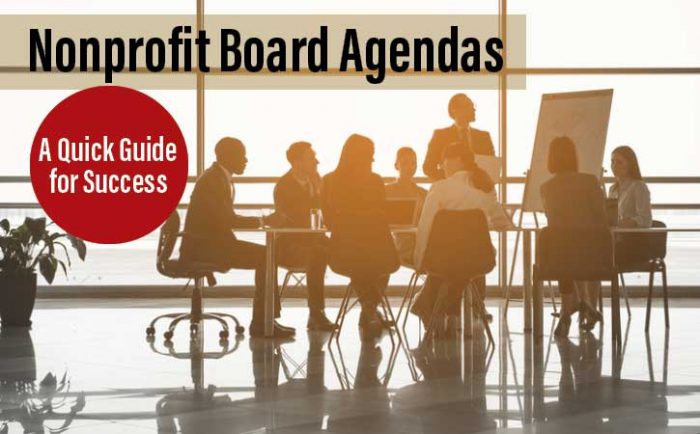
At the core of every productive board meeting is a well-structured agenda that guides attendees through discussion topics. From managing routine business items to paving the way for your fundraising, highly-focused agendas will include everything your board of directors needs to continue pushing your organization’s work forward.
Because nonprofits have limited resources, it’s important to create a focused plan for each meeting. This will set the tone and determine how engaged your board members will be during the meeting itself. A targeted agenda will limit side discussions and ensure every minute is used effectively.
As with any nonprofit operations, it’s best to have a solid strategy in place when creating and following an agenda. With a bit of planning, your board can substantially improve the effectiveness of its meetings. However, this entails more than following a simple governance checklist. That’s why we’ve put together four best practices that will help any nonprofit create stronger agendas:
Establishing a focused board meeting agenda in preparation for your meeting will help your board maximize accuracy and productivity. Ready to learn how to develop dynamic agendas? Let’s dive in!

An agenda serves as the roadmap for your meetings and empowers your chair to guide attendees through discussions.
Considering that you’ll likely cover an array of topics from major gift fundraising plans to programming, you’ll want to create an organized sequence of subjects instead of compiling a list of jumbled topics. This way, you’ll efficiently glide through discussion items and address all relevant business in a timely fashion.
To refine your agenda and make it the best it can possibly be, implement clear direction using these tips:
By implementing these suggestions, you’ll be able to limit side conversations and can get down to business. Best of all, a well-designed agenda can be used as an outline for your meeting minutes, saving you even more time.
According to Boardable’s board meeting minutes guide, taking this approach “gives you a predefined structure to follow, so you can spend more time listening and accurately capturing the conversation, rather than trying to start from scratch and record everything on the fly.” It’s a win-win! Otherwise, your minute taker will be forced to multitask by simultaneously creating the outline and recording the discussion, ultimately missing out on important information.

The time spent formatting your meeting’s agenda will go to waste without actionable discussion items. Overall, focus on quality over quantity. How the agenda physically looks matters less than what you plan to cover.
Here are two primary suggestions to keep front-of-mind when developing your agendas:
Overall, it might be best to ask your board members for their input on what should (and shouldn’t) be discussed. After all, two heads (or several) are better than one! Not only will this ensure you’re covering all the important discussion topics, but involving participants in the creation of your agenda is a fantastic way to spark enthusiasm.

Your board members lead busy lives with dozens of other responsibilities. By distributing your agenda in advance, you’ll ensure your meetings are highly efficient and you will convey that you value their time. According to this resource, you’ll want to distribute copies of your agenda and relevant documents at least a week ahead of time
Sharing an agenda in advance gives everyone the opportunity to come prepared with insightful thoughts and actively contribute. This is especially important for those who are assigned to cover any of the items.
With sufficient review time, attendees will have time to pull together reports and other documents required for the meeting. Further, this also allows them to request amendments to the agenda. While they may not always have something to add, they’ll appreciate having the opportunity to do so.
By sending a well-planned agenda in advance, your board members can rest assured knowing that all pressing issues are accounted for. In other words, they won’t stall the board meeting if they know their concerns will be addressed later on. In short, you can’t go wrong with early distribution of your agendas and relevant documents. Remember, the sooner, the better!

When it comes to board meetings, there are several moving parts. Prior to coming together, there’s a long list of to-do items—including setting a time that works, securely sharing documents, communicating meeting details, and much more. Luckily, you can simplify the planning process with dedicated board management tools that will handle the heavy lifting.
Implementing board management tools will centralize all meeting information and communication into one convenient location. Everything your leadership needs to host effective board meetings will be just a few clicks away. Here’s an idea of the tools that can streamline your meetings:
Incorporating the above tools into your tech stack means your board leadership will spend less time with the nitty-gritty details of lining up meetings and more time creating a high-engagement environment.
Just be sure that your board members understand how to use the technology effectively by training them and walking through the tools. Otherwise, some of your less-tech-savvy individuals may be apprehensive to share that they need guidance.
Once everyone is up and running with your software, you’ll find that you’re hosting more productive meetings and making the most of every minute.
Overall, board agendas are a vital consideration for nonprofit boards. They set the tone for meetings. Further, the proper tone is essential for driving respectful, collaborative conversations, which will in turn pave the way for your organization’s future. When you’ve constructed an exceptional agenda filled with actionable topics, you’ll invigorate board members and find that meetings are much more focused. Best of luck!




One Response
Comments are closed.